Read Shyama Prasad Mukherjee biography: his education, political career, Kashmir stance, death in custody, and his lasting legacy in Indian politics today.
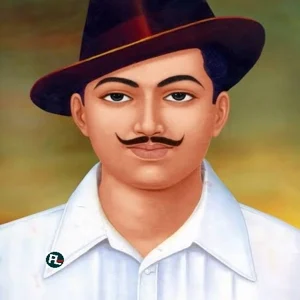
Shyama Prasad Mukherjee was an Indian barrister, educationist, and politician best remembered as the founder of the Bharatiya Jana Sangh, the political predecessor of today’s Bharatiya Janata Party. A brilliant academic who became the youngest-ever Vice-Chancellor of Calcutta University, he went on to serve as India’s first Minister of Industry and Supplies under Jawaharlal Nehru before resigning over policy disagreements and charting his own political path.
Mukherjee’s most defining political stance was his fierce opposition to Article 370, the constitutional provision granting special status to Jammu and Kashmir, a battle that ultimately led to his death in custody in 1953. Decades later, he remains a significant reference point in Indian political discourse, invoked regularly by leaders of the Hindu right as an ideological forerunner. This biography covers his early life, education, political career, and the legacy that continues to shape debates in Indian politics.
RELATED: Oscar Wilde Biography
Quick Facts About Shyama Prasad Mukherjee
| Field | Details |
|---|---|
| Full Name | Shyama Prasad Mukherjee |
| Date of Birth | July 6, 1901 |
| Place of Birth | Calcutta, Bengal Presidency, British India |
| Date of Death | June 23, 1953 (aged 51) |
| Place of Death | Srinagar, Jammu and Kashmir |
| Profession | Barrister, educationist, politician |
| Political Party | Bharatiya Jana Sangh (founder) |
| Other Affiliations | Indian National Congress (1929–1930), Hindu Mahasabha (until 1948) |
| Education | Presidency College (BA, MA, LLB, D.Litt.), Lincoln’s Inn |
| Spouse | Sudha Devi (m. 1922; died 1933) |
| Children | 5 |
| Known For | Founding the Bharatiya Jana Sangh; opposition to Article 370; death in custody in Kashmir |
Early Life and Education
Shyama Prasad Mukherjee was born on July 6, 1901, in Calcutta, into a family already well known in Bengal’s academic and public life. His father, Sir Ashutosh Mukherjee, was a prominent judge and educationist, while his mother, Jogamaya Devi, was known for her devotion to the family and, later, to his memory following his death. Growing up in this environment gave the young Mukherjee early exposure to both scholarship and public service.
He proved to be an outstanding student, graduating from Calcutta University and becoming a fellow of its Senate in 1923. Following his father’s death in 1924, he enrolled as an advocate at the Calcutta High Court, and two years later traveled to England to study at Lincoln’s Inn, where he qualified as a barrister in 1927. At just 33 years old, he was appointed Vice-Chancellor of Calcutta University, making him the youngest person ever to hold that position, a role he held until 1938.
Entry into Politics
Mukherjee’s political career began within the Indian National Congress, which he joined in 1929, though his association with the party was brief, lasting only until 1930. He subsequently moved toward Hindu nationalist politics, joining the Hindu Mahasabha and eventually rising to serve as its president from 1943 to 1947, a period that shaped much of his political outlook around cultural nationalism and Hindu identity within the Indian polity.
Following India’s independence and partition in 1947, Mukherjee was appointed India’s first Minister of Industry and Supplies, now equivalent to the Ministry of Commerce, in Jawaharlal Nehru’s cabinet, despite his history of political opposition to the Congress party. That appointment reflected Nehru’s early efforts to build a broadly representative government, though Mukherjee’s tenure would not last long given his growing disagreements with Congress policy.
Founding the Bharatiya Jana Sangh
Mukherjee resigned from Nehru’s cabinet in 1950, citing disagreements over government policy, including the Nehru-Liaquat Pact concerning the treatment of minorities in India and Pakistan. Two years later, in 1951, he founded the Bharatiya Jana Sangh, envisioning it as a nationalist political alternative built around cultural nationalism, national integration, and self-reliance, values he felt were being neglected under Nehru’s Congress-led government.
The party Mukherjee founded would go on to become one of the most consequential political organizations in India’s post-independence history, eventually evolving into the Bharatiya Janata Party, which today governs India at the national level. His early ideological framework — emphasizing a unified national identity and skepticism of what he viewed as excessive concessions to regional or religious separatism — remains closely associated with the party’s modern political identity.
Opposition to Article 370 and Death in Kashmir
Mukherjee became one of the most vocal critics of Article 370, the constitutional provision that granted Jammu and Kashmir a special autonomous status within India. He argued that the arrangement, including a permit system requiring Indian citizens to obtain documentation before entering the state, undermined the principle of equal citizenship and weakened national unity. His opposition was famously distilled into the slogan “Ek Desh Mein Do Vidhan, Do Pradhan Aur Do Nishan Nahin Chalenge” — that India could not function with two constitutions, two heads of government, and two flags.
In May 1953, Mukherjee entered Jammu and Kashmir without the required permit as an act of civil disobedience against the system he opposed, leading to his arrest by the state government led by Sheikh Abdullah. He was detained in Srinagar, and on June 23, 1953, he died in custody under circumstances that have remained the subject of dispute and controversy for decades. While official accounts attributed his death to cardiac arrest linked to an untreated illness, his family and political successors have long questioned the circumstances surrounding his detention and death, and calls for a fuller inquiry have persisted among his supporters.
Legacy and Political Relevance Today
Mukherjee’s death transformed him into a foundational figure for India’s Hindu nationalist political movement, and his ideological legacy is widely credited with shaping the eventual formation of the Bharatiya Janata Party in 1980. He is regularly commemorated by BJP leaders, with tribute ceremonies held annually on his death anniversary; in 2026, Delhi Chief Minister Rekha Gupta led one such ceremony at Shaheedi Park in New Delhi, joined by senior party leaders who paid respects with floral tributes and sapling plantings.
His legacy also surfaced prominently in the 2026 West Bengal election cycle, when BJP leaders described the party’s electoral gains in the state as a fulfillment of ambitions Mukherjee had held decades earlier for the party’s ideological presence there. At the same time, his record remains a point of sharp disagreement in Indian political discourse: supporters credit him with defending national unity and constitutional integration, while critics point to his Hindu Mahasabha background and question aspects of his political legacy. Numerous institutions across India, including universities, colleges, and a thermal power station, continue to bear his name today.
RECOMMENDED: Nhlanhla Mkhwanazi Biography
Final Thoughts
Shyama Prasad Mukherjee’s life traced an unusual arc — from academic prodigy and university administrator to cabinet minister and, ultimately, founder of a political movement that would reshape Indian politics decades after his death. His decision to resign from Nehru’s government and build an independent political alternative reflected a conviction that cultural nationalism deserved a stronger institutional voice in India’s early democracy.
More than seventy years after his death in custody, Mukherjee remains one of the most invoked and most contested figures in Indian political history, a testament to how his ideas continue to divide opinion even as they’ve shaped the trajectory of a major national party.
People Also Ask
How did Shyama Prasad Mukherjee die?
He died in custody in Srinagar on June 23, 1953, after being detained for entering Jammu and Kashmir without a permit in protest against Article 370; official accounts cite cardiac arrest, though the circumstances remain disputed by his supporters.
What political party did Shyama Prasad Mukherjee found?
He founded the Bharatiya Jana Sangh in 1951, which later evolved into the modern Bharatiya Janata Party (BJP).
Why did Shyama Prasad Mukherjee oppose Article 370?
He believed the provision’s special status for Jammu and Kashmir, including its permit system for visitors, undermined equal citizenship and weakened India’s national unity.
What was Shyama Prasad Mukherjee’s role in Nehru’s government?
He served as India’s first Minister of Industry and Supplies in Jawaharlal Nehru’s cabinet before resigning in 1950 over policy disagreements.