Explore Bhagat Singh’s biography — his age at death, family, education, revolutionary career, 1931 execution, and lasting legacy in India’s freedom struggle.
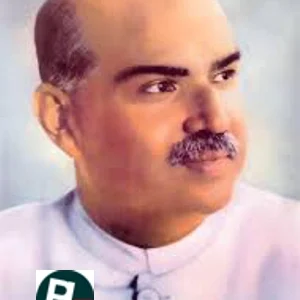
Bhagat Singh remains one of the most recognized names in India’s independence movement, remembered less for political office than for the sheer defiance of walking toward the gallows at 23 rather than compromise on his beliefs. Born into a Punjabi family already steeped in anti-colonial activism, he became a revolutionary thinker, writer, and organizer who argued that India’s freedom required more than replacing British rulers with Indian ones. He was executed by the British in 1931 alongside comrades Rajguru and Sukhdev, and the image of him walking calmly to his execution has become one of the most enduring in Indian history.
Nearly a century later, Bhagat Singh’s name still surfaces regularly in Indian public life — from annual Shaheed Diwas tributes to ongoing political demands that he be awarded the Bharat Ratna, India’s highest civilian honor. This article covers his early life, education, revolutionary career, and the latest developments connected to his legacy in 2026.
RELATED: Tukaram Mundhe Biography
Quick Facts About Bhagat Singh
| Field | Details |
|---|---|
| Full Name | Bhagat Singh |
| Date of Birth | September 28, 1907, Banga village, Punjab (present-day Pakistan) |
| Died | March 23, 1931 (aged 23), Lahore Central Jail |
| Profession | Revolutionary, freedom fighter, political writer |
| Spouse | Unmarried |
| Children | None |
| Education | National College, Lahore |
| Famous For | The Saunders killing; the Central Legislative Assembly bombing; execution alongside Rajguru and Sukhdev |
| Current Status | Deceased; commemorated annually on Shaheed Diwas (March 23) |
Early Life and Family
Birth, Hometown, and Upbringing
Bhagat Singh was born on September 28, 1907, in the village of Banga in Punjab’s Lyallpur district, an area that fell within Pakistan after Partition. He grew up in a Sikh Jat farming family in a household where talk of resisting British rule was simply part of daily life. Even as a young child, he was surrounded by stories of sacrifice and rebellion rather than the usual comforts of a quiet rural upbringing.
A Family Steeped in Revolution
His father, Kishan Singh, and his uncles, Ajit Singh and Swaran Singh, were all active in anti-colonial politics, and Ajit Singh in particular was a well-known agitator who spent years in exile for his activities. Bhagat Singh’s mother, Vidyavati Kaur, ran a household that treated political conviction as inseparable from family identity. Family lore has it that as a child he once told his father he intended to grow guns in the fields instead of crops — an early sign of where his convictions were headed.
Education
School Years at DAV, Lahore
Bhagat Singh attended the Dayanand Anglo-Vedic (DAV) School in Lahore, an institution linked to the Arya Samaj reform movement that shaped much of his early exposure to nationalist ideas. He was a strong student, but classmates and biographers describe him as someone more interested in history and political philosophy than in exam scores. That early curiosity about revolutionary movements elsewhere in the world would define the rest of his short life.
National College and a Political Awakening
He later enrolled at National College in Lahore, founded by Lala Lajpat Rai and Bhai Parmanand specifically to offer an alternative to British-run education. There, Bhagat Singh immersed himself in European history and the writings of revolutionary movements in Russia, Ireland, and Italy, building the ideological foundation for his own activism. It was also during this period that he began drifting from his family’s more moderate nationalist politics toward the armed revolutionary movement that would define his legacy.
Revolutionary Career: From Naujawan Bharat Sabha to the Gallows
Avenging Lala Lajpat Rai: The Saunders Killing
In 1926, Bhagat Singh helped found the Naujawan Bharat Sabha, a youth organization built around secular, socialist nationalism, before joining the Hindustan Republican Association, later renamed the Hindustan Socialist Republican Association. His most consequential early action came in 1928, after Lala Lajpat Rai died from injuries sustained during a police lathi-charge on a protest against the Simon Commission. Bhagat Singh and fellow revolutionaries plotted to kill the police official responsible and ended up shooting British officer John Saunders, mistaking him for the senior officer they had targeted.
The Central Legislative Assembly Bombing
On April 8, 1929, Bhagat Singh and fellow revolutionary Batukeshwar Dutt threw two low-intensity bombs into the Central Legislative Assembly in Delhi, deliberately avoiding casualties, and then showered the chamber with pamphlets before shouting the slogan “Inquilab Zindabad” — Long Live the Revolution. Rather than fleeing, both men surrendered on the spot, treating their arrest as a platform to publicize their cause rather than an outcome to avoid. That decision turned the ensuing trial into a stage for revolutionary politics that reached well beyond the courtroom.
Trial, Hunger Strike, and Execution
While in custody, Bhagat Singh and fellow prisoners launched a hunger strike demanding better treatment for political prisoners, a protest that drew national attention after fellow revolutionary Jatin Das died following 63 days without food. Bhagat Singh, Rajguru, and Sukhdev were tried in the Lahore Conspiracy Case for the Saunders killing and sentenced to death. The three were executed on March 23, 1931, at Lahore Central Jail, reportedly hanged ahead of the officially scheduled time to avoid public unrest, and their bodies were cremated secretly on the banks of the Sutlej River near Hussainiwala.
Personal Life
A Life Devoted to the Cause, Not Marriage
Bhagat Singh never married. His family reportedly attempted to arrange a marriage for him in his late teens, but he resisted, telling relatives that his life was already committed to the freedom struggle rather than domestic life. That refusal became part of the broader public image of a young man who treated personal sacrifice as inseparable from political conviction.
Beliefs: Socialism, Atheism, and Revolutionary Writing
Beyond his direct actions, Bhagat Singh was a serious political writer, producing essays and prison letters that argued for socialism, secularism, and internationalist solidarity among the oppressed. His 1930 essay “Why I Am an Atheist,” written while awaiting execution, laid out a reasoned rejection of religious belief that remains widely read in India today. That combination of armed action and serious political writing is part of why his legacy still resonates across very different ideological camps.
Financial Status
Bhagat Singh doesn’t have a “net worth” in any meaningful sense — he came from a modest landowning farming family, gave up formal career prospects for underground revolutionary work, and died at 23 with no personal wealth or property of note. His legacy today is measured in influence and memory rather than money, which is part of why the ongoing debate over honors like the Bharat Ratna carries such symbolic weight.
Latest News and Recent Developments in 2026
The Ongoing Bharat Ratna Debate
The long-running campaign to have Bhagat Singh posthumously awarded the Bharat Ratna remained active in 2026. In March, Punjab’s Leader of the Opposition, Partap Singh Bajwa, accused the state’s ruling party of blocking a Congress-backed resolution in the Punjab Vidhan Sabha that sought to formally recommend the honor to the central government. The resolution’s rejection renewed a decades-old political argument over why Bhagat Singh, despite his stature, has never received India’s highest civilian award.
119th Birth Anniversary and Continuing Tributes
Bhagat Singh’s 119th birth anniversary falls on September 28, 2026, and is expected to bring the usual wave of tributes from political leaders, state-level commemorations in Punjab, and events at sites connected to his life. His name also surfaced in an unrelated context in early 2026, when a Telugu-language action comedy titled “Ustaad Bhagat Singh,” starring Pawan Kalyan, released in cinemas — a fictional film unconnected to the historical revolutionary, but one that briefly drove additional search interest in his name.
Achievements and Legacy
Honors and Places Named After Him
Bhagat Singh is commemorated across India through Shaheed Diwas observances every March 23, along with statues, murals, and institutions bearing his name, including Shaheed Bhagat Singh Nagar district in Punjab. He has never received the Bharat Ratna, despite repeated resolutions and appeals from politicians across party lines over the years. Numerous films, books, and school curricula have kept his story in continuous circulation for nearly a century.
A Legacy Claimed Across the Political Spectrum
Part of what keeps Bhagat Singh’s legacy politically active is that different groups emphasize different parts of his story — his socialism and atheism appeal to the political left, while his nationalism and personal sacrifice are frequently invoked by the right. That tension occasionally surfaces in debates over how he should be remembered in textbooks, official tributes, and public monuments, though his status as a revered martyr of the independence movement is essentially unchallenged across the spectrum.
RECOMMENDED: Elon Musk Biography
The Bottom Line
Bhagat Singh’s life lasted only 23 years, but almost a century later, he remains one of the most consistently invoked figures in Indian public life — a measure of how much impact a short life dedicated to a cause can have. The very fact that political parties are still debating how to formally honor him in 2026 says something about how unresolved, and how alive, that legacy still is.
What makes his story endure isn’t just the drama of the bombing or the execution — it’s that he left behind actual arguments, in his own writing, about the kind of society he wanted independence to build. Nearly a hundred years on, those arguments are still being read, quoted, and fought over.
People Also Ask
Why was Bhagat Singh hanged?
Bhagat Singh was sentenced to death in the Lahore Conspiracy Case for his role in the 1928 killing of British police officer John Saunders, carried out in retaliation for the fatal police assault on Lala Lajpat Rai. He was executed on March 23, 1931, alongside fellow revolutionaries Rajguru and Sukhdev.
What did Bhagat Singh write while in jail?
While awaiting execution, Bhagat Singh wrote extensively on politics and philosophy, most notably the essay “Why I Am an Atheist,” which laid out his rejection of religious belief through reasoned argument. His prison writings remain widely read and studied in India today.
Has Bhagat Singh received the Bharat Ratna?
No. Despite repeated political resolutions and public campaigns, including a blocked resolution in the Punjab Vidhan Sabha in March 2026, Bhagat Singh has never been awarded India’s highest civilian honor.
Did Bhagat Singh get married?
No, Bhagat Singh never married. He reportedly resisted a marriage his family attempted to arrange for him, saying his life was already committed to the freedom struggle.